
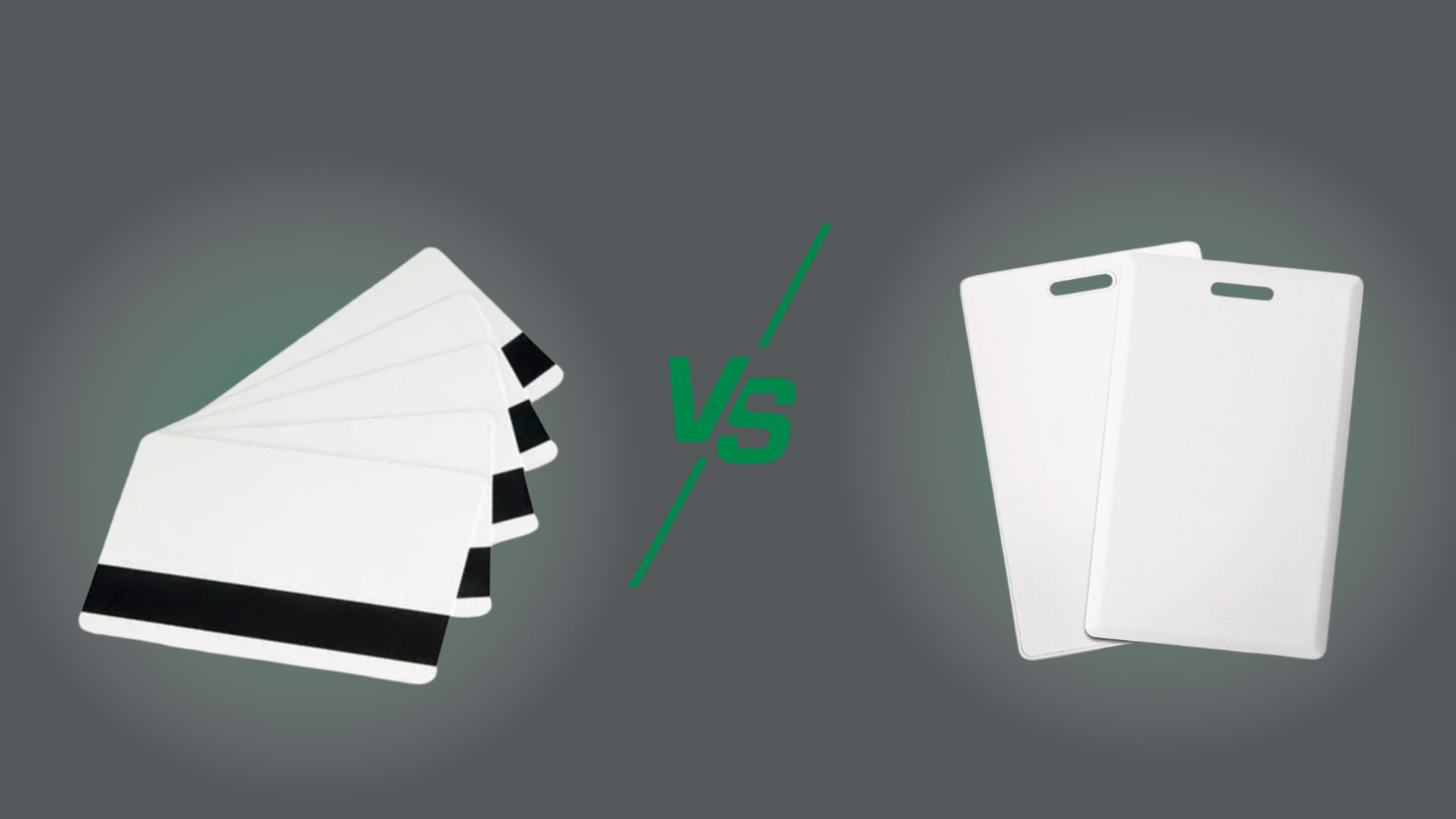
Selecting the right access control credential is an important step in protecting your organization. Two of the most widely used options are smart cards and proximity (prox) cards. While both are designed for secure access, the way they work, the level of security they provide, and their overall flexibility differ significantly. Understanding these differences will help you determine which solution best aligns with your organization’s needs.
What Are Smart Cards and Proximity Cards?
Smart Cards
Smart cards are equipped with an embedded microchip that can store and process data. Depending on the type, these can be:
- Contact-based smart cards – require physical contact with a reader.
- Contactless smart cards – use radio frequencies to transmit data to a reader.
This technology allows smart cards to handle advanced applications, from secure building entry to cashless payments and computer logins.
Proximity Cards
Proximity cards, often referred to as prox cards, rely on radio frequency identification (RFID) technology. Each card contains an antenna and transmits a unique ID number to the reader when it’s nearby. Prox cards are primarily read-only, meaning they can’t process or store additional information like smart cards can.
Key Differences Between Smart Cards and Proximity Cards
Technology & Functionality
- Smart Cards: Contain a microprocessor capable of data storage, encryption, and advanced applications.
- Proximity Cards: Use basic RFID technology for read-only access control.
Security
- Smart Cards: Offer strong security, with encryption, multi-factor authentication, and the ability to store sensitive data like digital certificates or biometric details.
- Proximity Cards: Provide standard access security but are more vulnerable to cloning and duplication.
Cost
- Smart Cards: Higher upfront investment due to advanced features and supporting infrastructure.
- Proximity Cards: More affordable, making them popular for organizations with smaller budgets or simpler security needs.
Flexibility & Scalability
- Smart Cards: Highly versatile, supporting multiple applications such as payments, secure logins, and loyalty programs. They can easily scale with growing security demands.
- Proximity Cards: Primarily limited to access control. While scalable in quantity, they lack the multifunctionality of smart cards.
Ease of Use
- Smart Cards: May require some training depending on how they’re used across different systems.
- Proximity Cards: Simple and user-friendly—employees just present the card near a reader for access.
Choosing the Right Credential for Your Organization
When evaluating whether to use smart cards or proximity cards, consider the following:
- Security Requirements
- High-security environments such as government offices or financial institutions benefit from smart cards.
- For lower-risk settings like schools or small businesses, prox cards may be sufficient.
- Budget
- Smart cards are ideal if your organization can invest in advanced technology and long-term scalability.
- Prox cards are cost-effective for basic access control.
- Future Plans
- If you anticipate expanding into applications like secure logins, biometric authentication, or cashless systems, smart cards provide the flexibility you’ll need.
- If access control is your only requirement, prox cards are a simple and effective choice.
- User Experience
- Consider how much training your staff may require. Prox cards are extremely easy to use, while smart cards may take some adjustment depending on integration.
Final Thoughts
Both smart cards and proximity cards bring unique benefits to access control systems. Smart cards deliver robust security and versatility for organizations that need advanced solutions, while proximity cards offer a reliable, cost-effective option for basic access needs. The best choice depends on your customer’s organization’s security priorities, budget, and long-term goals.
At ID Connection, we offer a full range of ID card printers, smart cards, proximity cards, and related supplies. Our team can help you select the right solution for your environment. Plus, if you’re interested in becoming a distributor or reseller, we’d love to connect with you. Contact us today to discuss your access control needs and find the best products for your organization.