
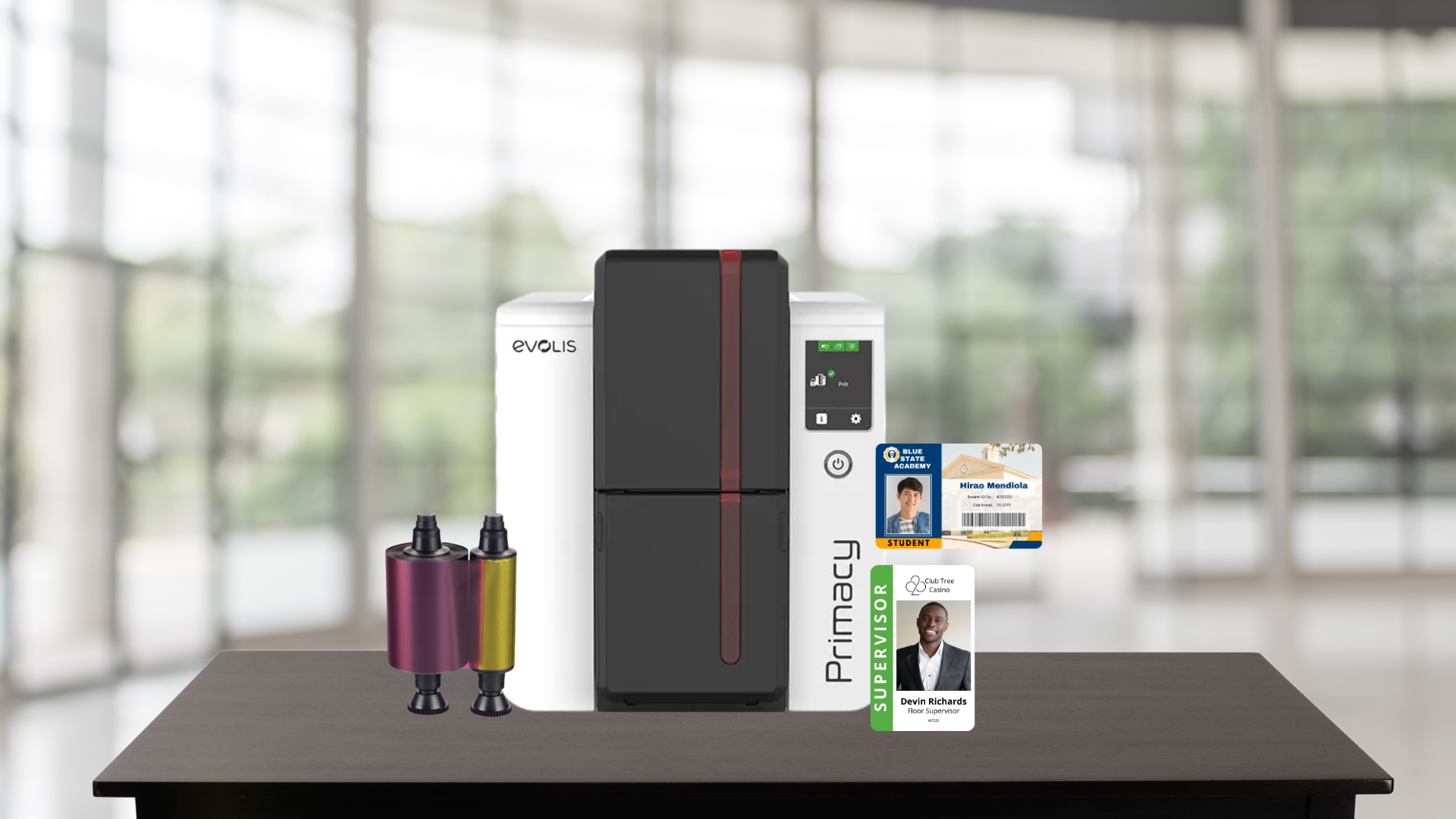
One of the most common questions customers ask before purchasing an ID card printer is, “How long will it last?” As a reseller or distributor, having the answer not only builds trust but also creates opportunities to strengthen customer relationships through ongoing support, maintenance, and future upgrades.
Most ID card printers have a lifespan of 5 to 10 years, though the actual longevity depends on factors such as print volume, maintenance, operating environment, and the quality of supplies used. Understanding these factors allows you to recommend the right printer for your customer’s needs today—and identify the right time to discuss upgrades tomorrow.
Average Lifespan of an ID Card Printer
The expected lifespan of an ID card printer varies based on how heavily it’s used:
- Low-volume environments (small offices, private schools): 7–10 years
- Mid-volume environments (corporate offices, healthcare facilities): 5–7 years
- High-volume environments (universities, government agencies, large enterprises): 3–5 years
Customers printing thousands of cards each year will naturally experience more wear than those producing only a few hundred annually. This is why matching customers with the right printer from the start is essential.
What Affects the Lifespan of an ID Card Printer?
Several factors determine how long a printer will continue operating efficiently.
Print Volume
Frequent printing places additional wear on key components, including:
- Printheads
- Rollers
- Cleaning assemblies
- Encoding modules
For customers with growing badge programs, upgrading to a higher-volume printer before performance becomes an issue can reduce downtime and improve productivity.
Reseller Tip: During annual customer check-ins, ask how many cards they’re printing today compared to when they purchased their current printer. Increased print volume is often an early indicator that an upgrade may be beneficial.
Maintenance Makes a Difference
Routine maintenance is one of the easiest ways to extend the life of an ID card printer. Regular cleaning helps prevent dust, ribbon residue, and debris from damaging sensitive components.
Encourage customers to:
- Clean the printer after every ribbon change.
- Use manufacturer-recommended cleaning kits.
- Keep the printer covered when it’s not in use.
Helping customers establish a preventive maintenance routine not only protects their investment but also reduces support calls and unexpected repairs.
Quality Supplies Help Protect the Printer
The supplies customers use matter just as much as the printer itself.
Low-quality cards may shed debris or have rough edges that can prematurely wear printheads and rollers. Manufacturer-approved ribbons and quality PVC or composite cards help maintain print quality while protecting internal components.
This presents an opportunity to educate customers on why genuine supplies can reduce long-term operating costs.
Direct-to-Card vs. Retransfer Printing
The type of printer also influences longevity.
- Direct-to-Card (DTC) printers print directly onto the card surface, making them an excellent choice for many everyday applications.
- Retransfer printers print onto a film that is then fused to the card. Because the printhead never comes into direct contact with the card, retransfer printers often experience less printhead wear—particularly in high-volume environments.
For customers with demanding production requirements, upgrading to a retransfer printer may provide better durability, improved image quality, and lower long-term maintenance costs.
Environmental Conditions Matter
Customers don’t always realize that where the printer is located can affect its lifespan.
Conditions that can reduce longevity include:
- Dusty workspaces
- High humidity
- Extreme temperatures
- Poor ventilation
Encouraging customers to operate their printer in a clean, climate-controlled environment can help prevent avoidable service issues.
How Long Does a Printhead Last?
The printhead is one of the most valuable components in any ID card printer.
Depending on the model, printheads are typically rated for 30,000 to 100,000 prints. Proper maintenance and quality supplies can help them last for years, while poor cleaning habits and low-quality media can significantly shorten their lifespan.
If a customer has replaced multiple printheads over the life of their printer, it may be time to evaluate whether continued repairs are the most cost-effective solution.
Service Agreements Create Long-Term Value
Service maintenance agreements don’t just benefit customers—they also create recurring revenue opportunities for resellers and distributors.
Offering maintenance services helps customers keep their systems operating efficiently while providing ongoing touchpoints throughout the life of the printer. Depending on your service offerings, agreements may include:
- Preventive maintenance
- Depot repair services
- On-site service
- Software support
- Installation and training
- System monitoring
- Emergency support
- Equipment rentals
These programs help reduce downtime, simplify budgeting, and improve the overall ownership experience.
For resellers, they also create opportunities to identify changing customer needs and recommend new hardware when the time is right.
Signs It’s Time to Recommend an Upgrade
Rather than waiting for a printer to fail completely, help customers recognize when replacement may be the better investment.
Watch for signs such as:
- Frequent card jams
- Faded or inconsistent print quality
- Multiple printhead replacements
- Increasing repair costs
- Slow production speeds
- Compatibility issues with newer operating systems or software
If annual repair costs continue to climb, replacing the printer often delivers better long-term value than continuing to repair aging equipment.
Turning Replacement Conversations into Sales Opportunities
Every aging printer represents an opportunity to help customers improve their badge issuance process.
When discussing replacements, focus on the business benefits rather than simply selling newer hardware. Modern ID card printers can provide:
- Faster print speeds
- Higher-resolution printing
- Enhanced security features
- Improved encoding capabilities
- Better network and cloud connectivity
- Increased reliability with less downtime
Position the conversation around solving the customer’s operational challenges, not just replacing equipment. Customers are often more receptive when they understand how a new system can improve efficiency, reduce maintenance costs, and support future growth.
Build Long-Term Customer Relationships
The lifespan of an ID card printer isn’t just a technical specification—it’s an opportunity for resellers to provide ongoing value throughout the customer’s ownership journey.
By educating customers on proper maintenance, recommending quality supplies, offering service agreements, and proactively discussing upgrades when appropriate, you position yourself as a trusted advisor rather than simply a product supplier.
Helping customers maximize the life of their current printer while knowing when it’s time to upgrade creates stronger relationships, recurring business, and long-term customer loyalty.
Help Your Customers Upgrade with Confidence
Knowing when to repair, maintain, or replace an ID card printer can be challenging for customers. As a reseller or distributor, you can provide added value by helping organizations evaluate their current systems, identify opportunities for improvement, and find the right solution for their evolving needs.
Whether your customer needs a replacement printer, updated supplies, a maintenance plan, or guidance selecting the right technology, ID Connection is here to support you every step of the way.
Contact us today to speak with an ID solutions specialist about available products, upgrade opportunities, and resources to help you better serve your customers. Together, we can help you deliver reliable ID card solutions that keep your customers’ operations running smoothly.